
A resignation letter for stress or mental health addresses the need to leave a job due to overwhelming emotional or psychological challenges. It should be clear, concise, and maintain professionalism while emphasizing personal well-being. Expressing gratitude for the opportunity helps preserve positive relationships despite the difficult decision.
Resignation letter due to work-related stress and anxiety
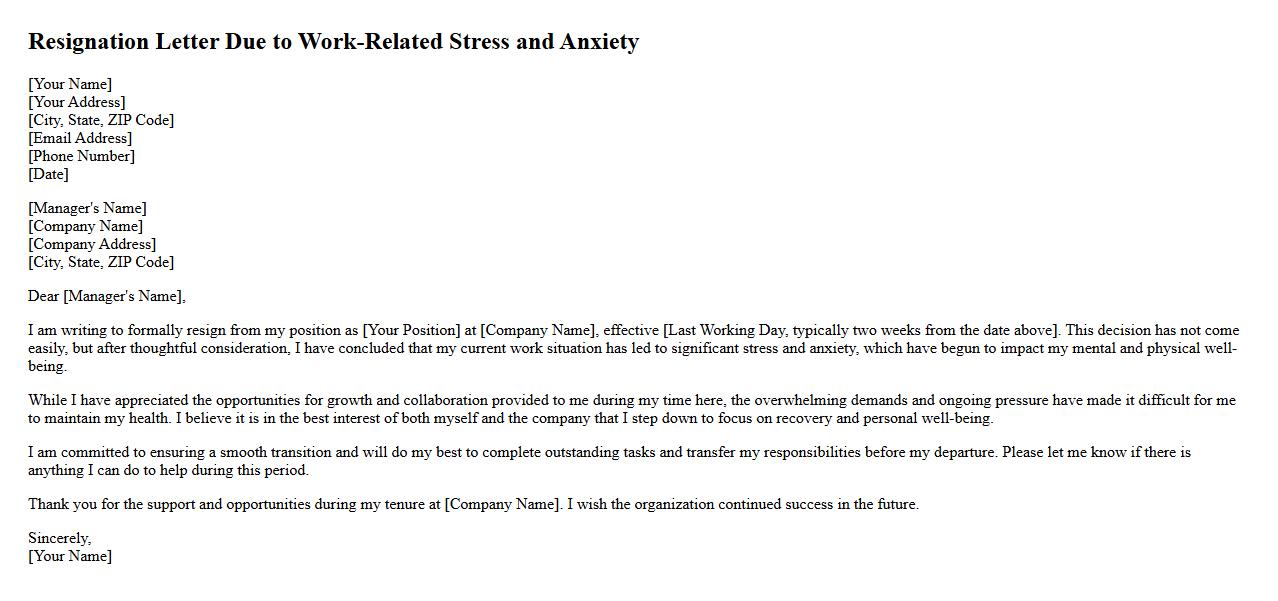
A resignation letter due to work-related stress and anxiety is a formal document written by an employee who decides to leave their job because of the negative impact work has had on their mental health. This letter typically explains the reasons for the resignation, emphasizing the overwhelming stress and anxiety experienced in the workplace, which may affect productivity and overall well-being. It serves to notify the employer respectfully while highlighting the importance of personal health and the need for a less stressful environment.
Sample resignation letter for mental health deterioration
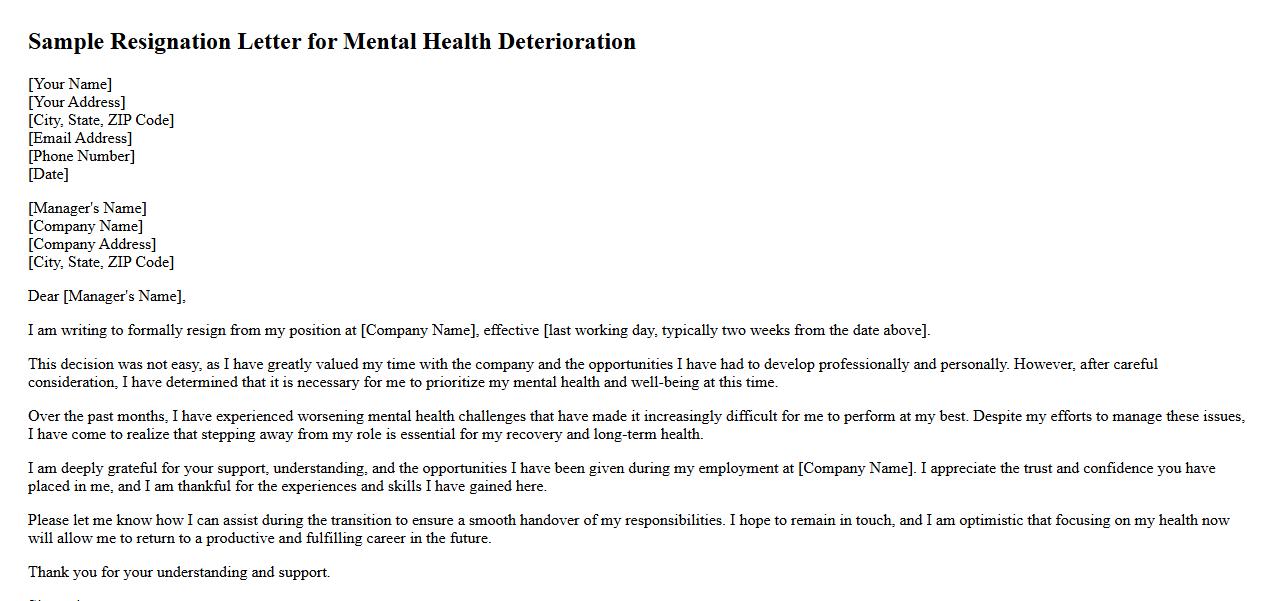
This sample resignation letter addresses mental health deterioration as the primary reason for stepping down from a position, emphasizing the importance of prioritizing personal well-being. The letter is clear and respectful, expressing gratitude for the opportunities provided while honestly communicating the need to focus on recovery and health. It serves as a thoughtful example for individuals seeking to resign due to mental health challenges, ensuring professionalism and sensitivity in the resignation process.
Resignation letter for job burnout and exhaustion
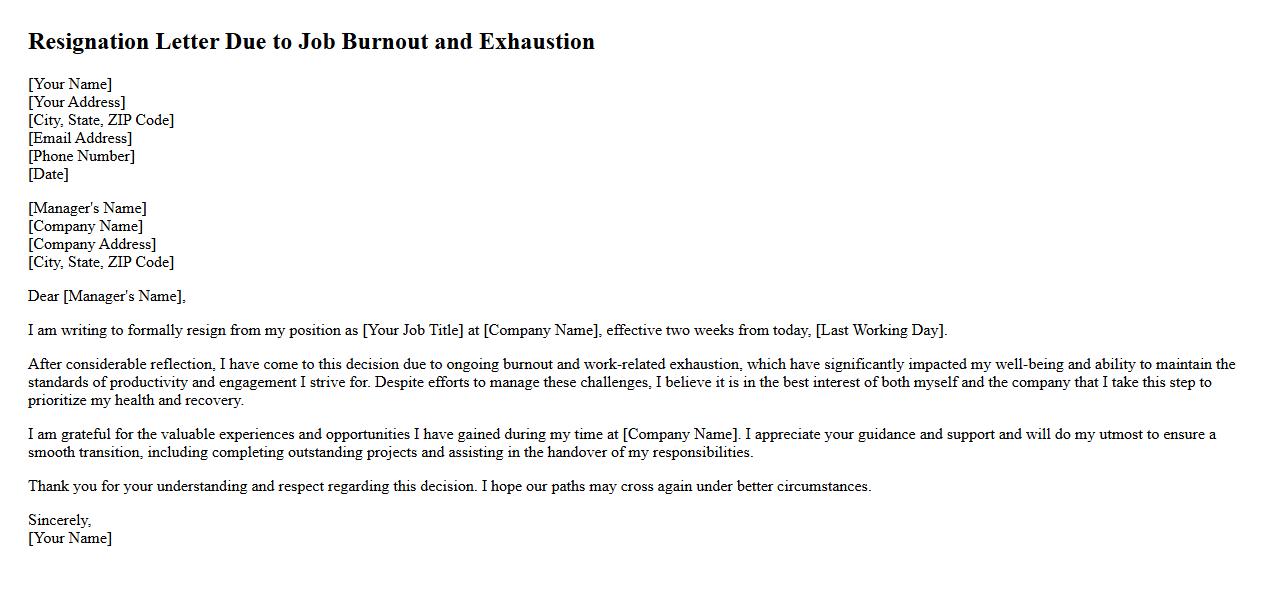
A well-crafted resignation letter for job burnout and exhaustion communicates the employee's decision to leave their position due to overwhelming work-related stress and fatigue, emphasizing the need for personal health and well-being. It is important to maintain professionalism while honestly expressing the reasons for resignation, highlighting the impact of prolonged burnout and exhaustion on productivity and mental health. Such a letter helps ensure a respectful and understanding departure from the organization, allowing for closure and future opportunities focused on recovery and growth.
Resignation due to chronic stress and emotional fatigue
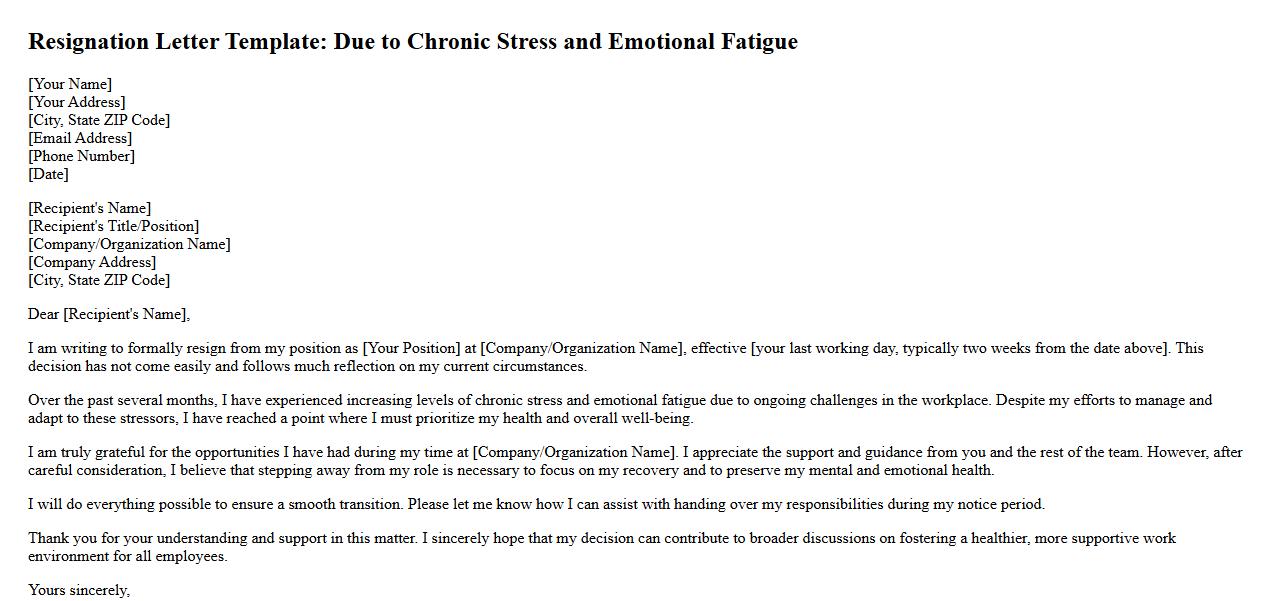
Resignation due to chronic stress and emotional fatigue occurs when an individual is compelled to leave their position as a result of prolonged exposure to overwhelming stressors and persistent emotional exhaustion. This condition often arises from high-pressure work environments, lack of support, and continuous demands that exceed an employee's coping capacity, ultimately impacting mental health, job satisfaction, and overall well-being. Recognizing this cause of resignation underscores the importance of workplace mental health initiatives and supportive organizational practices to prevent burnout and promote sustainable employment.
Mental health reason resignation letter template
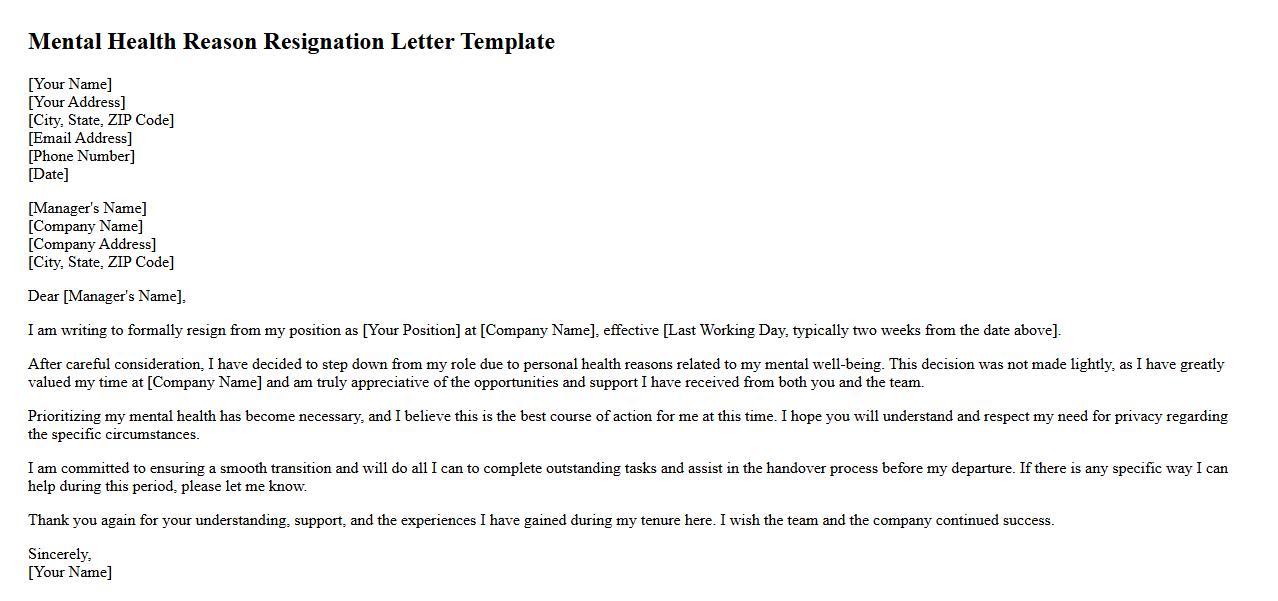
This mental health reason resignation letter template provides a compassionate and professional way for employees to formally notify their employer about their decision to resign due to mental health concerns. It emphasizes the importance of mental well-being, respects privacy, and maintains a positive tone while clearly communicating the need to prioritize personal health. This template aids in ensuring a smooth transition and fosters understanding between the employee and employer during a sensitive time.
Quitting job for depression and anxiety relief letter
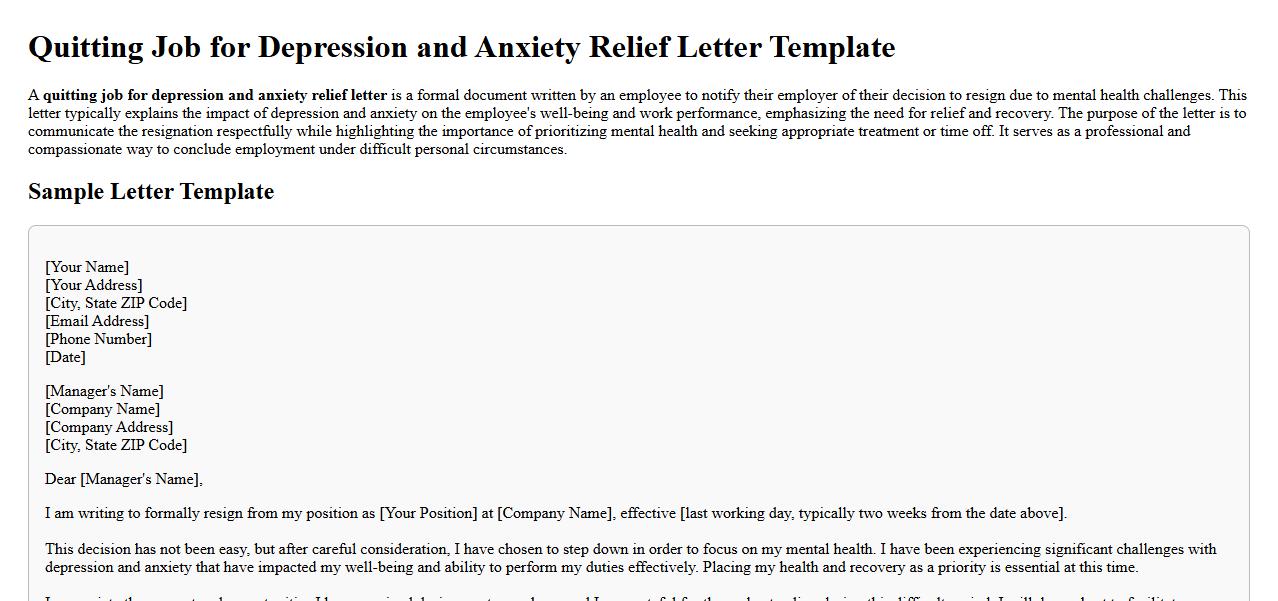
A quitting job for depression and anxiety relief letter is a formal document written by an employee to notify their employer of their decision to resign due to mental health challenges. This letter typically explains the impact of depression and anxiety on the employee's well-being and work performance, emphasizing the need for relief and recovery. The purpose of the letter is to communicate the resignation respectfully while highlighting the importance of prioritizing mental health and seeking appropriate treatment or time off. It serves as a professional and compassionate way to conclude employment under difficult personal circumstances.
Resignation letter for stress-induced health issues
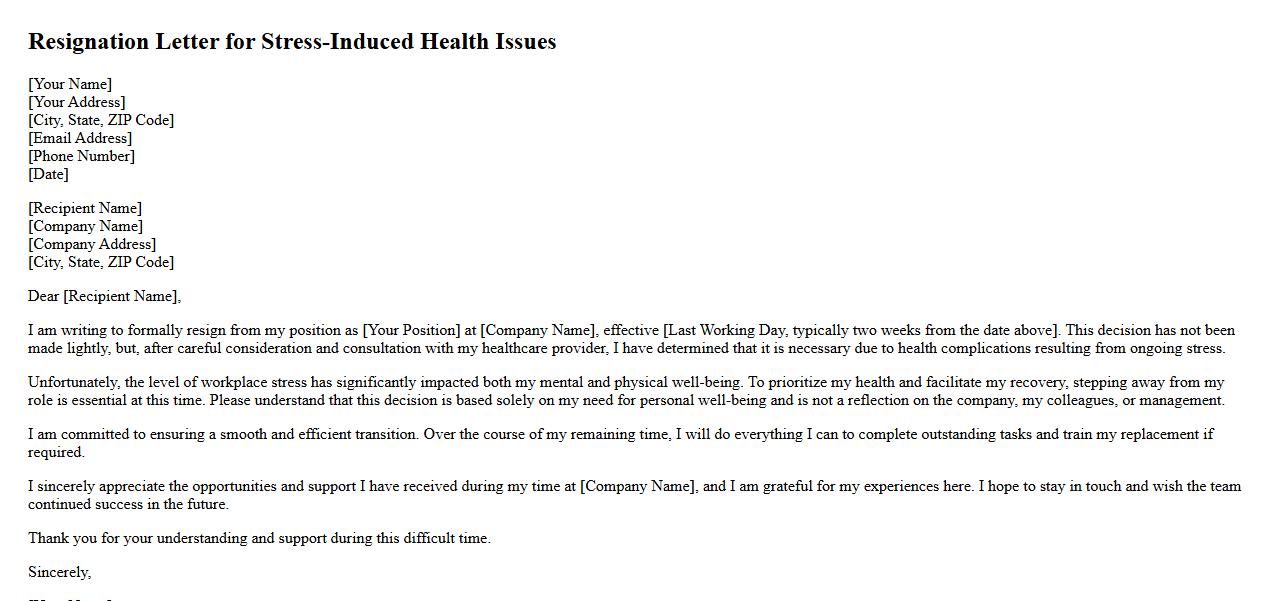
A resignation letter for stress-induced health issues is a formal document in which an employee communicates their decision to leave a position due to health complications caused by stress. This letter typically explains the reasons for resignation related to mental or physical health concerns, emphasizing the need for recovery and well-being. It serves as a professional and respectful notice to the employer, allowing for a smooth transition while highlighting the importance of addressing work-related stress and prioritizing personal health.
Formal resignation letter citing mental health concerns
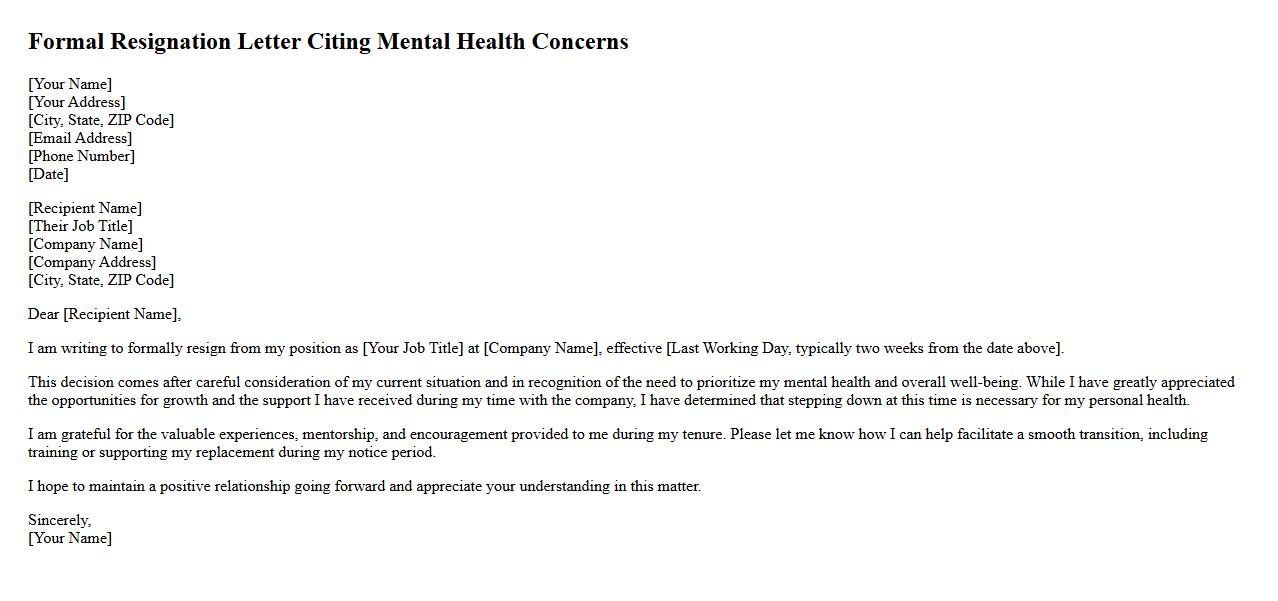
A formal resignation letter citing mental health concerns is a professional document in which an employee respectfully announces their decision to leave their position due to the impact of work-related or personal mental health challenges. This letter typically expresses appreciation for the opportunities provided while clearly stating the need to prioritize mental well-being. It may include a brief explanation of the circumstances without disclosing sensitive details, ensuring a respectful tone that maintains professionalism and opens the door for future positive references or interactions.
Resigning because of overwhelming stress at workplace
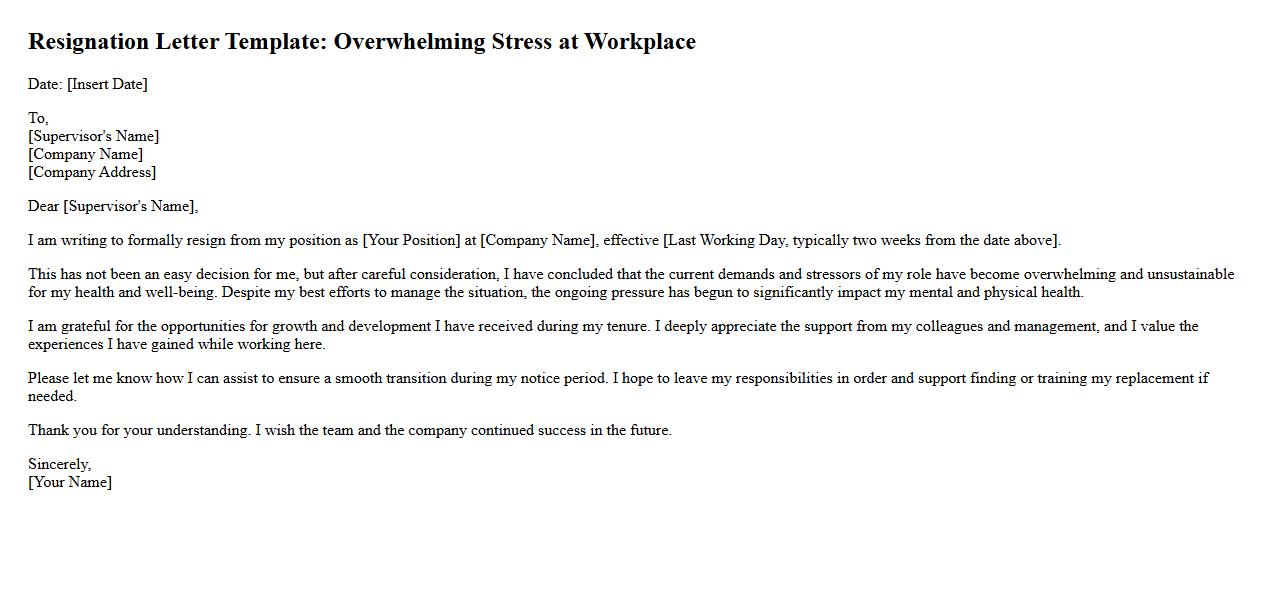
Resigning due to overwhelming stress at the workplace occurs when the pressure, workload, and emotional demands exceed an individual's capacity to cope effectively. This decision is often driven by persistent anxiety, burnout, decreased job satisfaction, and deteriorating mental and physical health. Leaving the position aims to prioritize personal well-being and seek a healthier, more supportive work environment where stressors are manageable and professional growth is encouraged.
Immediate resignation letter for mental health crisis
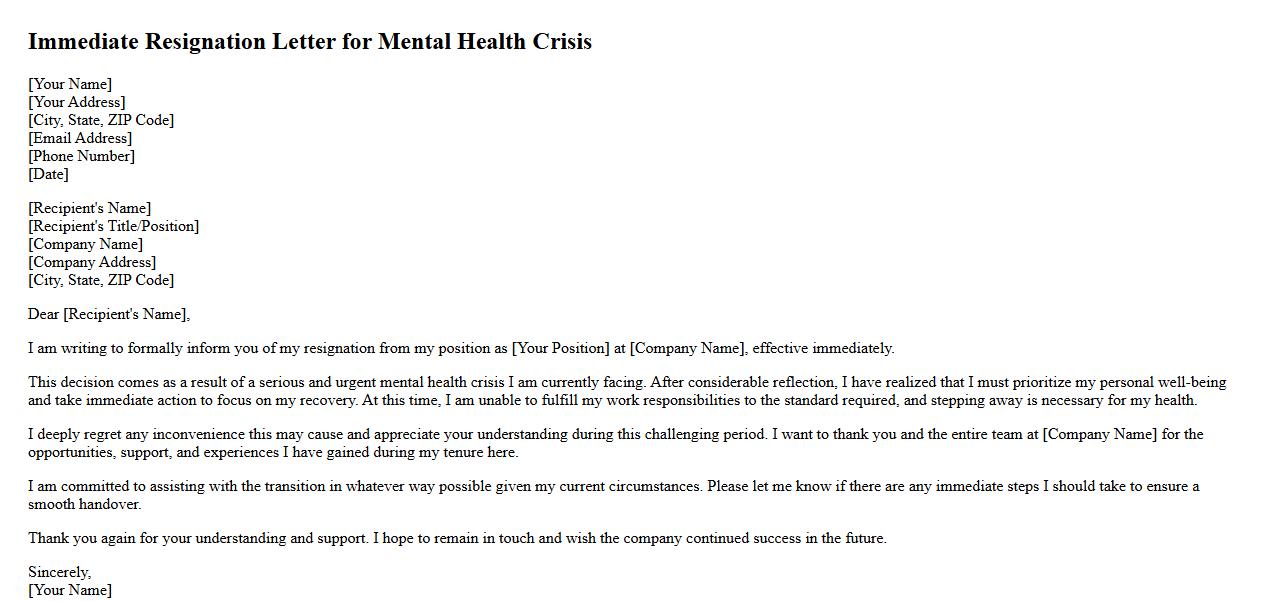
An immediate resignation letter for mental health crisis is a formal document written by an employee to promptly inform their employer of their decision to resign due to urgent mental health challenges. This letter typically conveys the need for immediate leave to prioritize personal well-being and recovery, highlighting the importance of mental health and the necessity to step away from work responsibilities without delay. It serves to maintain professionalism while emphasizing the critical nature of the situation, ensuring clear communication during a difficult time.
What key elements should be included in a resignation letter due to stress or mental health reasons?
A resignation letter due to stress should clearly state your intention to resign and the effective date. It is important to maintain a professional tone while briefly mentioning the reason as related to health concerns. Including a note of gratitude for the opportunities provided by the employer adds a respectful touch.
How can you express your reasons for resignation without disclosing sensitive mental health details?
Use general terms such as personal health or well-being without going into specifics about your mental health. Keep the explanation concise and focused on the need for a break or change for health reasons. This approach respects your privacy while providing a valid rationale for your resignation.
What is the appropriate tone to use in a resignation letter focused on stress or mental health?
The tone should remain professional and respectful, avoiding overly emotional language. Express your message with clarity and calmness to maintain a constructive atmosphere. Striking a balance between honesty and diplomacy is crucial in this context.
Should you mention potential accommodations or support measures in your resignation letter for mental health reasons?
Generally, a resignation letter is not the place to request accommodations; it is better suited for a separate discussion. However, you can mention openness to provide information if needed for transition purposes. Focus the letter on your decision rather than negotiating support.
How can you formally convey gratitude despite the difficult circumstances leading to your resignation?
Include a sincere statement thanking your employer for the experience and opportunities gained during your tenure. Acknowledging positive aspects fosters goodwill even in challenging situations. This shows professionalism and preserves future relationships.