

A Formal Letter with Apology for Delay in Response acknowledges the tardiness in replying while maintaining professionalism and politeness. It expresses regret clearly, offers a brief explanation if appropriate, and reassures the recipient of future timely communication. This type of letter helps preserve relationships and demonstrates respect and responsibility.
Formal letter apologizing for delay in response to business inquiry
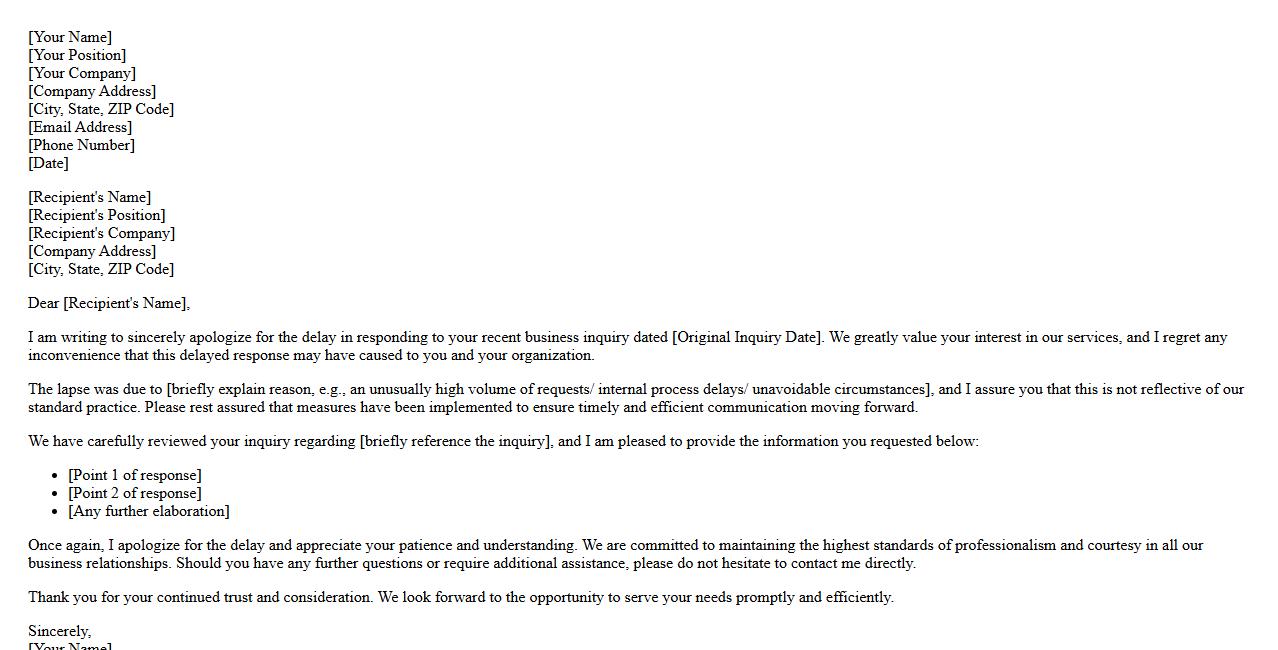
This formal letter apologizing for delay in response to business inquiry acknowledges the delayed communication, expresses sincere regret for any inconvenience caused, and provides a clear explanation for the lapse. It reinforces the sender's commitment to maintaining professional and courteous business relations, assures prompt attention to the inquiry moving forward, and seeks to restore trust and goodwill with the recipient by demonstrating accountability and respect.
Apology letter for late response due to workload
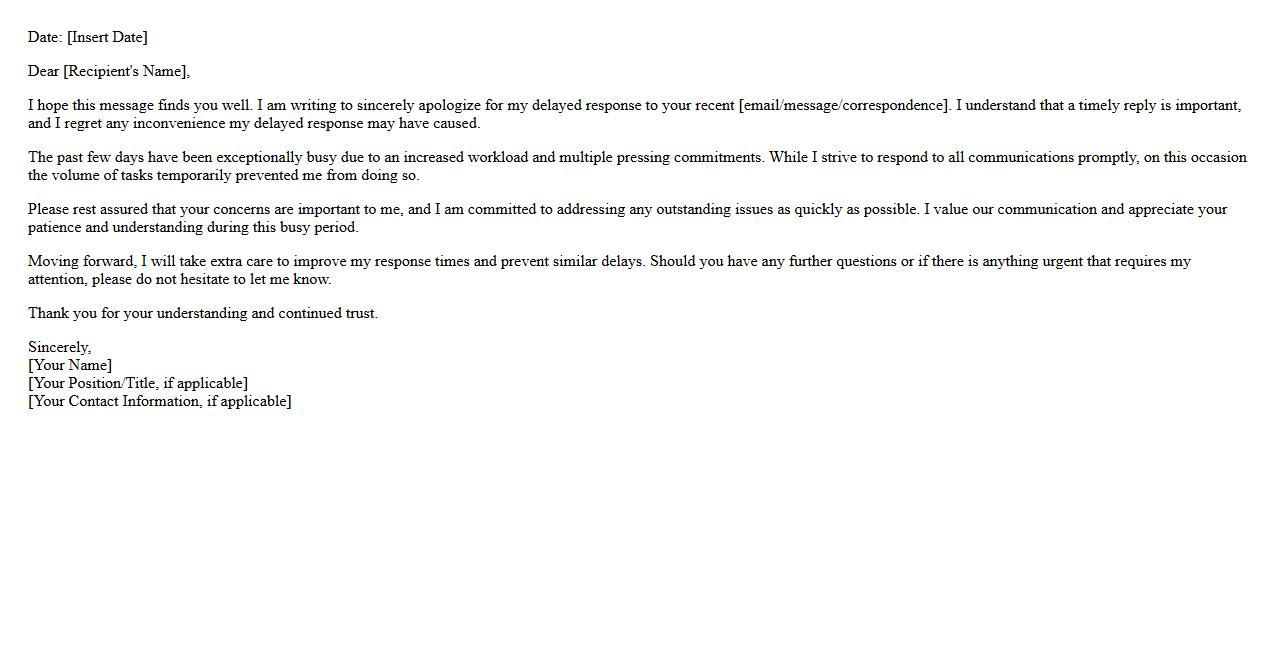
This apology letter for late response due to workload expresses sincere regret for the delayed reply caused by an overwhelming amount of tasks and responsibilities. It acknowledges the inconvenience caused to the recipient, provides a brief explanation of the workload challenges, and reassures a commitment to improving communication and promptly addressing any outstanding issues moving forward. The tone is professional, courteous, and emphasizes accountability and respect for the recipient's time.
Professional apology for delayed reply to client email
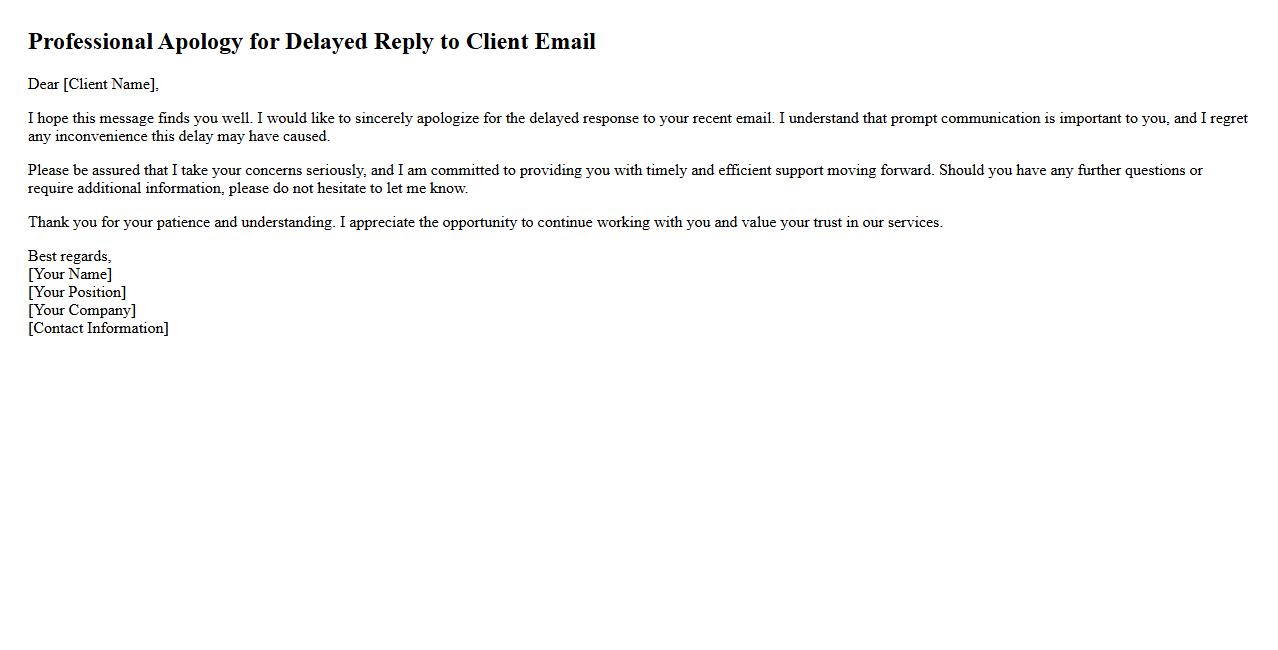
Crafting a professional apology for delayed reply to client email involves acknowledging the delay sincerely, expressing regret for any inconvenience caused, and reassuring the client of your commitment to addressing their concerns promptly. This approach helps maintain trust, demonstrate accountability, and strengthen client relationships by showing respect for their time and emphasizing your dedication to effective communication and customer service.
Formal letter for late response to job application
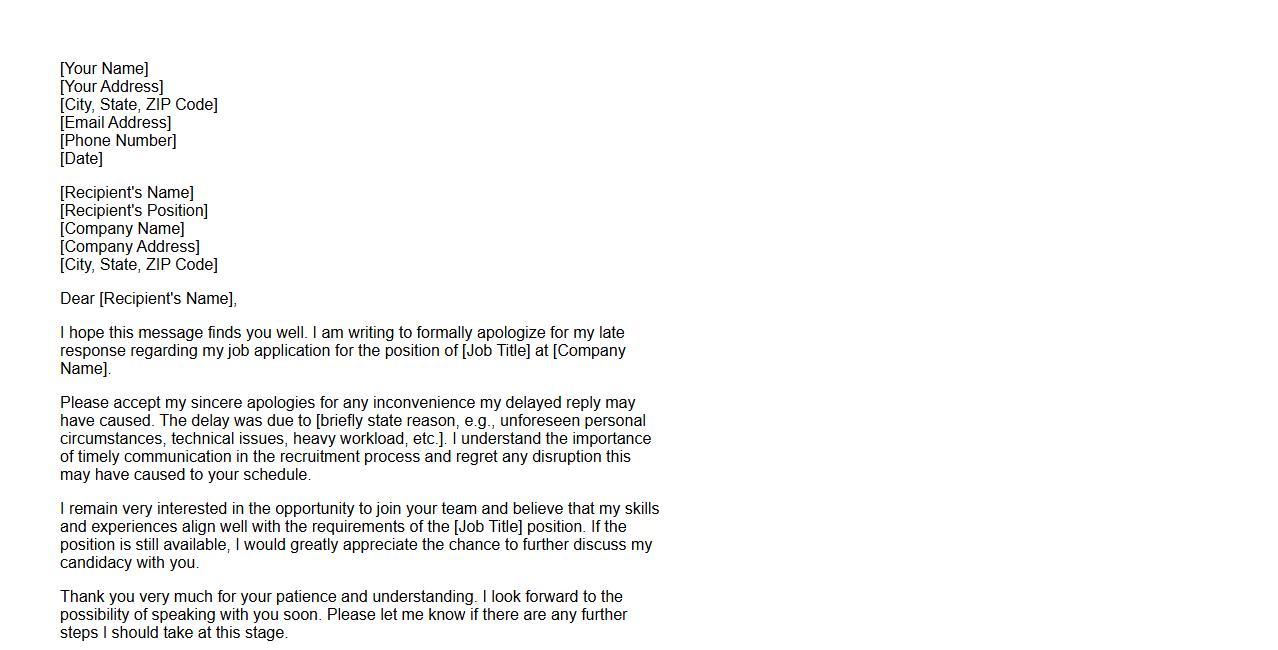
A formal letter for late response to job application is a professional communication sent by a candidate or employer to acknowledge and apologize for the delayed reply regarding a job application. This letter expresses regret for any inconvenience caused by the lateness, provides a clear explanation or reason for the delay, and reiterates interest in the job opportunity or appreciation for the applicant's patience. It maintains a respectful and courteous tone while aiming to preserve a positive relationship between the applicant and the hiring party.
Apology for delayed correspondence in official communication
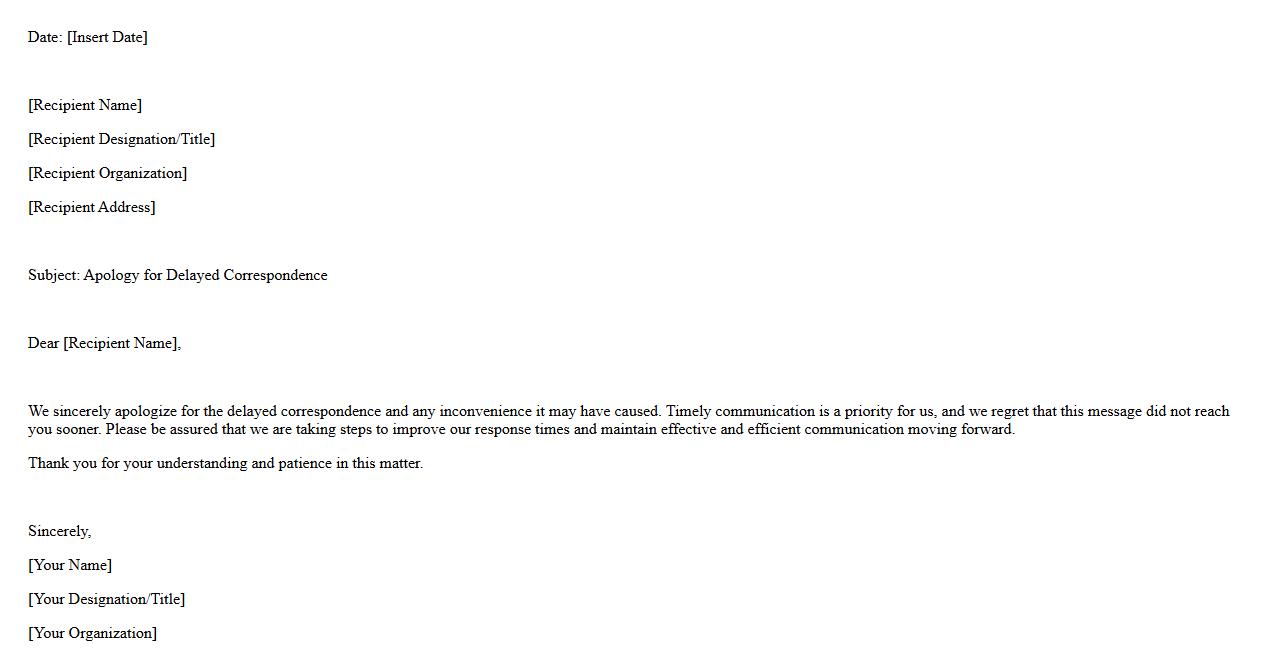
We sincerely apologize for the delayed correspondence and any inconvenience it may have caused. Timely communication is a priority for us, and we regret that this message did not reach you sooner. Please be assured that we are taking steps to improve our response times and maintain effective and efficient communication moving forward. Thank you for your understanding and patience in this matter.
Formal apology letter for not replying promptly to customer complaint
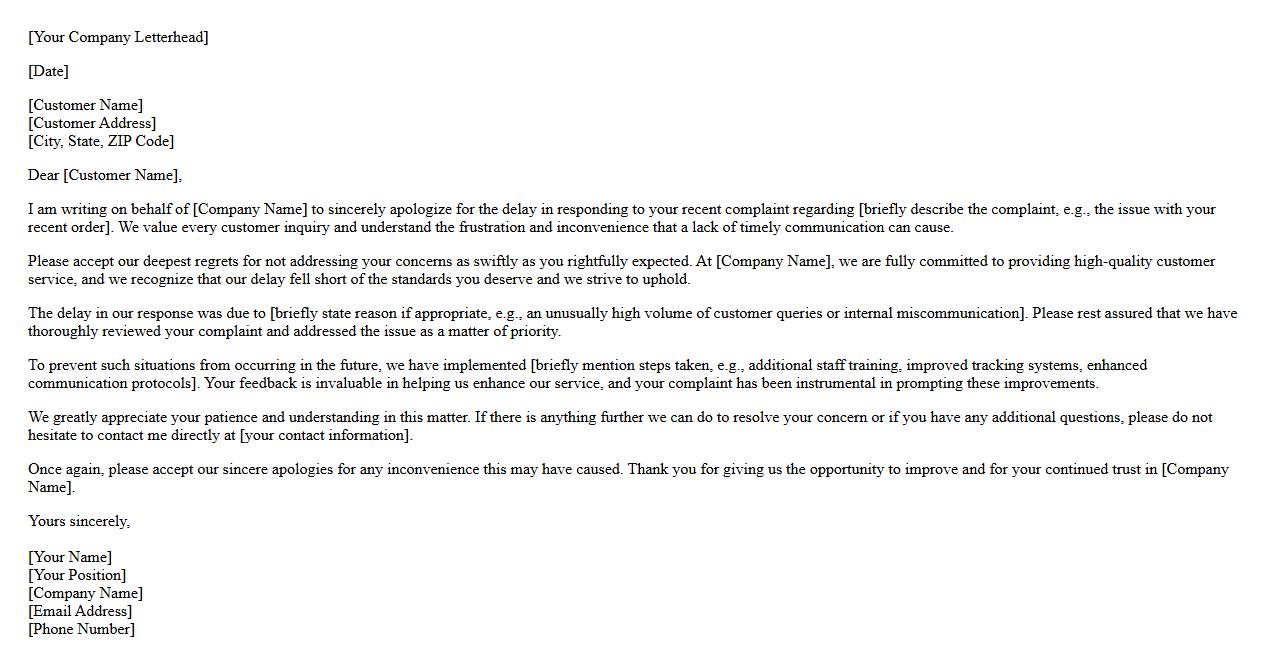
This formal apology letter addresses the issue of not replying promptly to a customer complaint, expressing sincere regret for the delay in response and acknowledging the inconvenience caused. It aims to reassure the customer of the company's commitment to high-quality service, provide an explanation if appropriate, and outline the steps taken to resolve the complaint swiftly and prevent future delays. The letter seeks to restore customer trust and demonstrate accountability and professionalism in customer service.
Apology for late response due to unforeseen circumstances
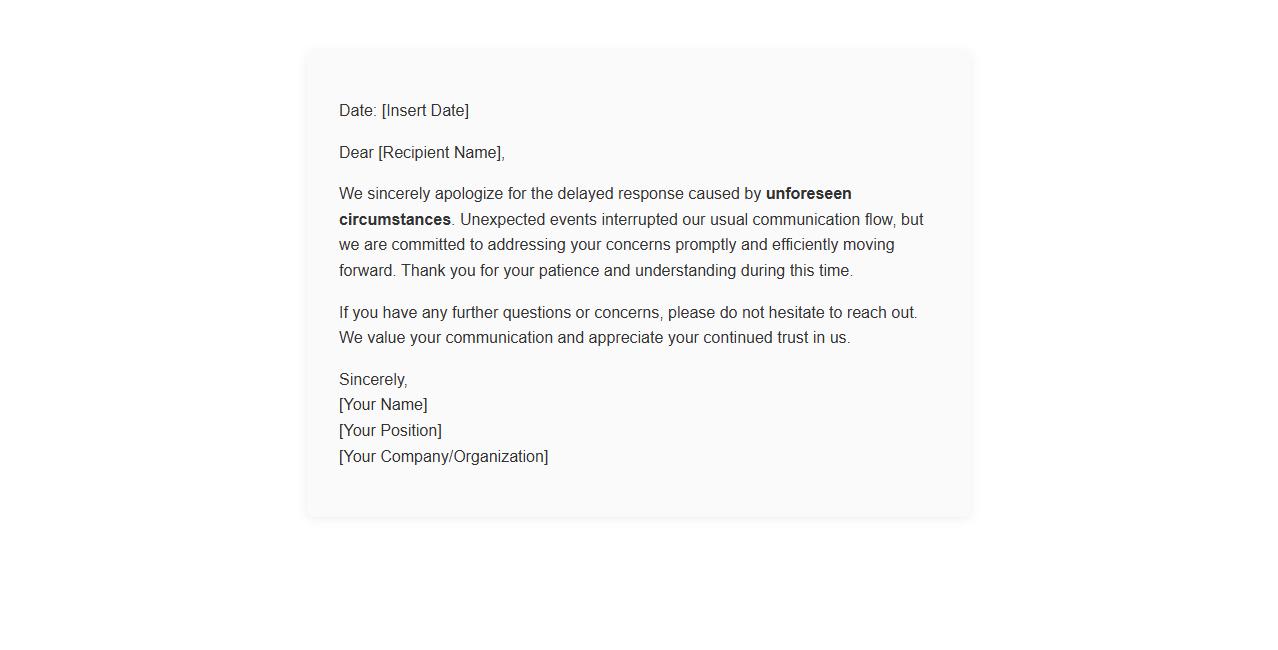
We sincerely apologize for the delayed response caused by unforeseen circumstances. Unexpected events interrupted our usual communication flow, but we are committed to addressing your concerns promptly and efficiently moving forward. Thank you for your patience and understanding during this time.
Letter apologizing for delayed response to meeting invitation
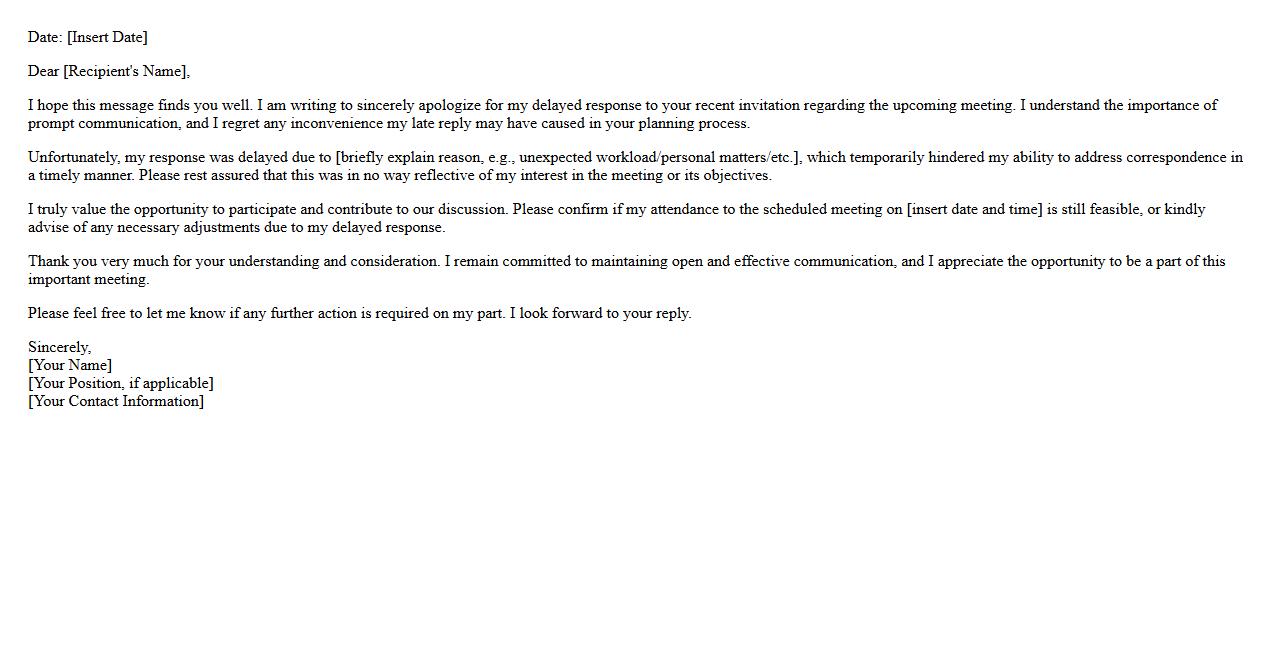
This letter serves as an apology for the delayed response to the meeting invitation, expressing regret for any inconvenience caused by the late reply. It acknowledges the importance of timely communication, explains the reasons for the delay, and reaffirms the sender's interest and commitment to attending or participating in the scheduled meeting. The letter aims to maintain professionalism and goodwill while restoring effective communication with the recipient.
Formal apology for late reply because of personal reasons
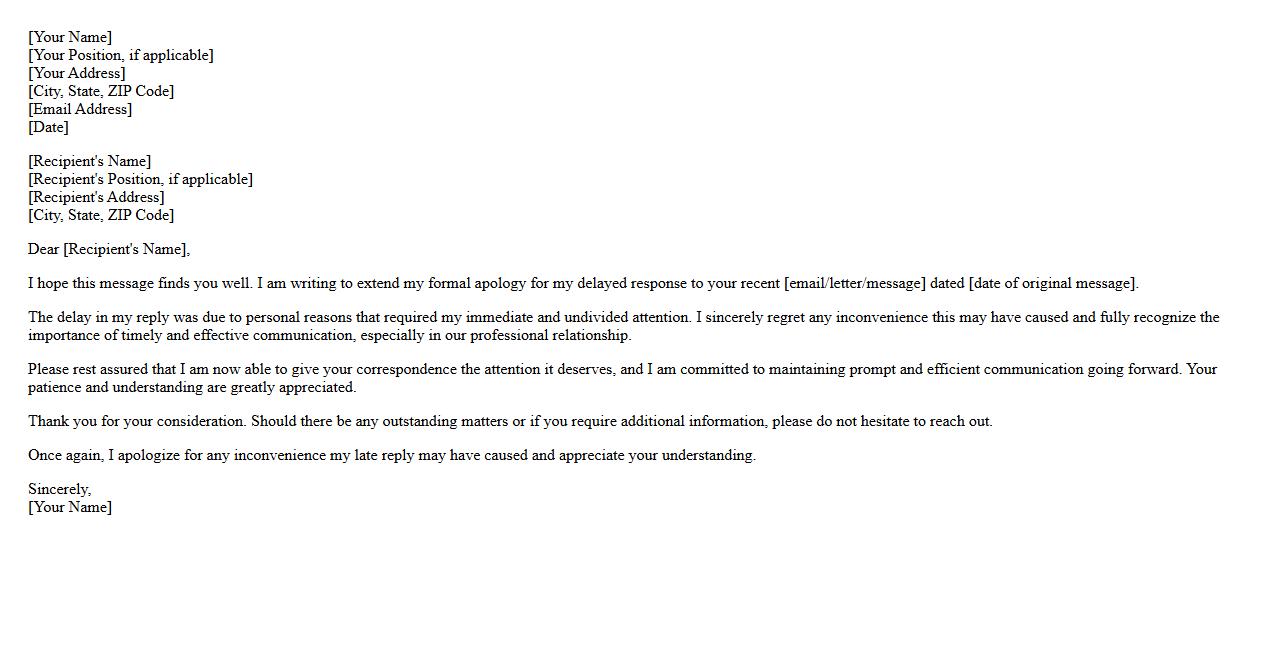
This message serves as a formal apology for late reply due to personal reasons, acknowledging the delay in communication and expressing sincere regret for any inconvenience caused. It emphasizes the importance of timely responses and assures the recipient of renewed commitment to prompt and effective correspondence in the future, while maintaining professionalism and understanding.
Apology letter for response delay due to miscommunication in office
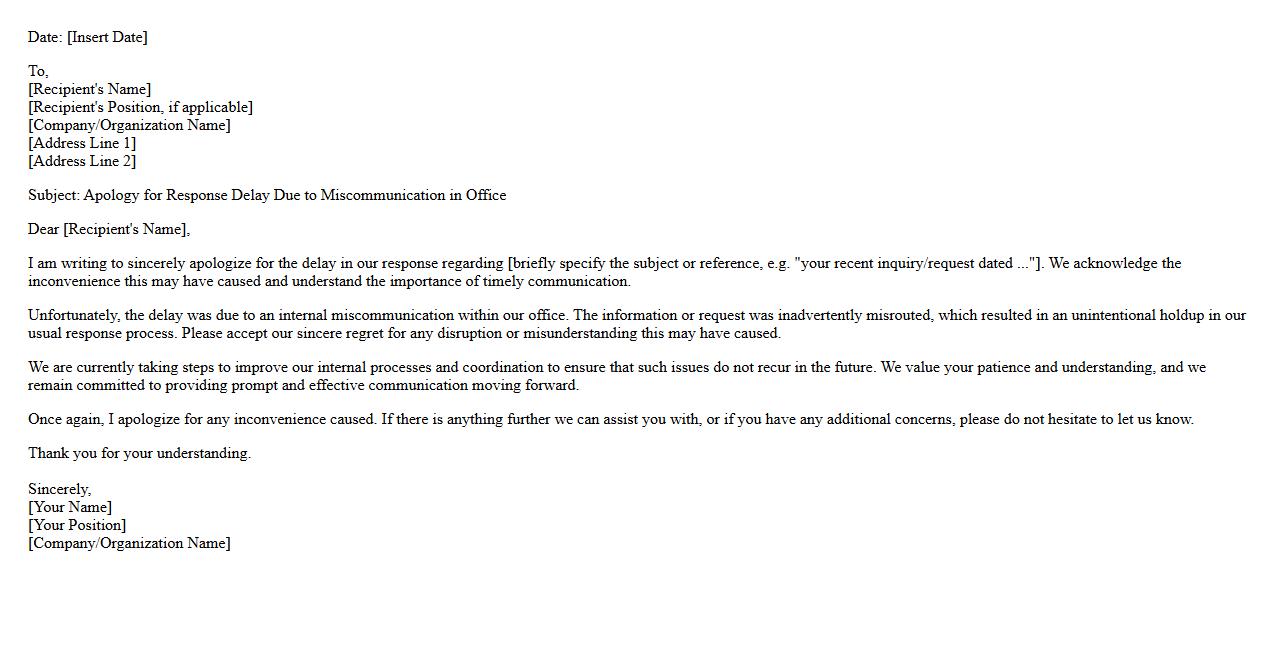
This letter serves as an apology for response delay due to miscommunication in office, acknowledging the inconvenience caused by the delayed reply and explaining the circumstances that led to the miscommunication. It expresses sincere regret for any disruption or misunderstanding, assures the recipient of improved internal coordination, and reiterates a commitment to timely and effective communication in the future to prevent similar issues.
What is the primary purpose of a formal letter with an apology for delay in response?
The primary purpose of a formal letter with an apology for delay in response is to acknowledge the delay and express regret. It serves to maintain professionalism and preserve the relationship with the recipient. This letter helps to rebuild trust by showing responsibility for the tardiness.
Which key elements must be included to ensure the apology is clear and professional?
Key elements include a clear expression of apology, a brief explanation if appropriate, and a statement of commitment to timely communication in the future. Including the recipient's name and referencing the original correspondence adds personalization. The letter must be concise, polite, and free of defensive language to appear professional.
How does the tone of the letter influence the recipient's perception of your sincerity?
The tone significantly shapes the recipient's perception of your sincerity and responsibility. A respectful, humble tone conveys genuine regret and respect for the recipient's time. Conversely, a casual or dismissive tone can imply indifference, damaging the professional relationship.
When is it appropriate to provide reasons for the delayed response in the letter?
Providing reasons is appropriate when the delay was caused by unavoidable or understandable circumstances. It is important to keep the explanation brief and avoid sounding like an excuse. Transparency fosters empathy while maintaining professionalism.
What actions can be proposed in the letter to rectify or mitigate the delay?
The letter can propose specific actions such as expedited handling of the matter, offering assistance, or setting a new deadline. Showing a proactive commitment to resolve any inconvenience demonstrates accountability. These measures help restore confidence and improve future communication.